
The most noteworthy old tree of Hacienda Barú that has passed on during our time here was an enormous ceibo tree (Ceiba pentandra) -- known as thekapok or silk cotton tree in English -- that dominated the skies between what are today the Hacienda Barú Restaurant and the El Ceibo Service Station. Its familiar form, tall straight trunk and distinctive umbrella shaped top, was a well known landmark in the area.
The parcel of tillable land surrounding it was known to rice farmers as the ceibo lot. Though it stood about half a kilometer from the beach, it was clearly visible for several kilometers out to sea. The local fisherman used to determine their positions relative to this tallest, most distinctive fixed point while fishing in the vecinity of Barú and Guápil Beaches.
The wood storks roosted in the umbrella-shaped crown of the ceibo for a few nights each year on their annual migration. Barn owls frequented the inner chambers often calling loudly in the night even to the point of disturbing the neighbors’ sleep. Chestnut mandibled toucans made their nests there and at least one variety of bats resided in the darker recesses. Clouds of the small furry mammals poured from a gaping hole in the trunk about 20 meters (65 feet) above ground every evening at dusk.
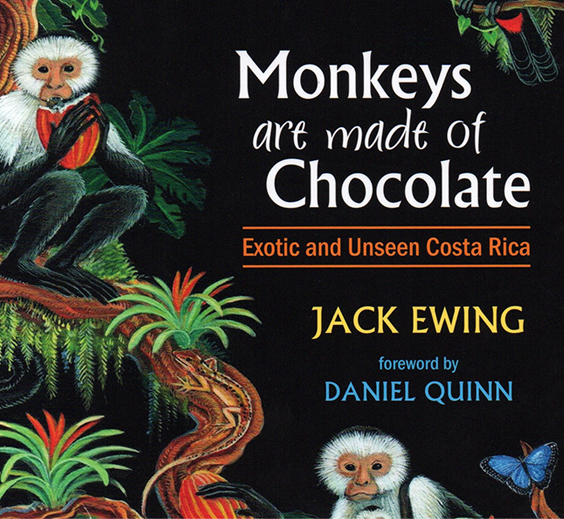
- By Jack Ewing
When I first laid eyes on the two black kittens a quote from a Robert Heinlein novel popped into my mind,. It has been so many years ago since I read it that I can't even remember which one is was, but I remember the quote. In referring to a complex subject Heinlein said that making sense of it was “... like searching in a dark cellar at midnight on a moonless night for a black cat that isn't there.” These two kittens were that black without a hint of any other color. Even their eyes were black. In addition to their extreme blackness there was always an air of mysteriousness about them. They didn't walk like ordinary cats, rather they walked all crouched down, more of a creep than a walk, like they were constantly stalking something. They never made any noises other than purring; they never clawed the furniture; they were never underfoot and never got into trouble of any kind. There was always something strange about them. We named them Hocus and Pocus.

The troop of 26 monkeys was strung out over about 100 meters, moving through the forest. The lead monkey, a mature female, came to an area where the tree cover was broken by an open swamp with only a narrow corridor two trees wide going around it.
Our Gift Shop is well known in the area for having a wide variety of gifts. Not only will you find T-Shirts, Hammocks and Jewelry, but also a beautiful selection of Costa Rican made Arts and Crafts. Our policy is to buy (as much as possible) from local artisans who work with local materials of a sustainable resource.